A Comprehensive Guide to Whole-House Customization 2026: Industry Insights, Consumer Traps & Smart Purchasing Tips

Boasting high space utilization and unified overall style, whole-house customization has become a mainstream choice for home renovation. Nevertheless, as the industry expands rapidly, issues like information asymmetry and irregular business practices keep emerging, leaving many consumers falling prey to pitfalls during selection, communication and acceptance. Combining the latest industry dynamics, this article analyzes market conditions and core pain points, clarifies selection criteria, and sorts out detailed tips to avoid risks throughout the process. It helps you make rational decisions and steer clear of most consumer risks.
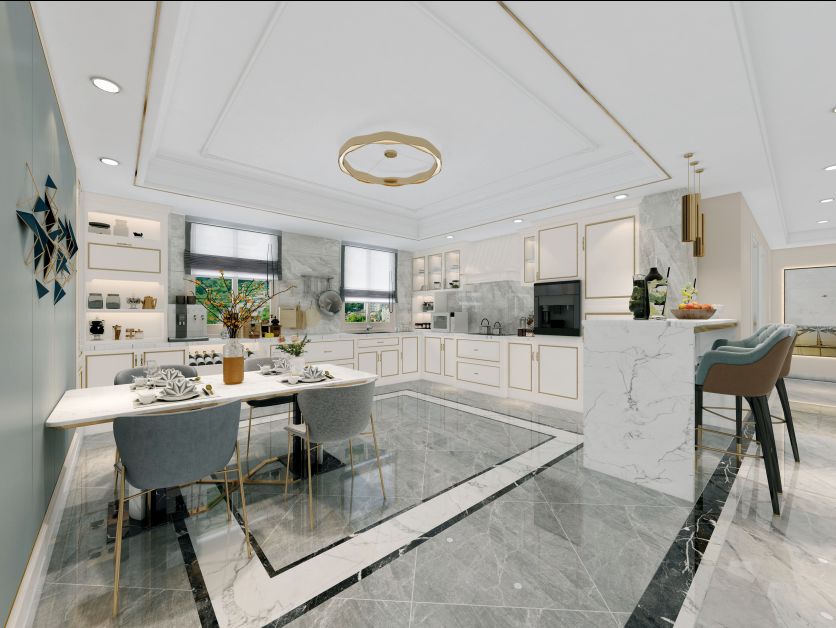
The domestic whole-house customization market maintains steady growth in 2026, yet the overall growth rate has slowed down to 5%-8%, marking the arrival of a stock competition era. Statistics show that renovation demands for existing properties account for over 50% of the market, surpassing new home decoration as the primary driving force for growth.
The industry presents distinct tiered features: leading brands focus on large-scale layout, local small and medium-sized factories tap into regional markets, and boutique design studios deliver refined customization services. Meanwhile, cut-throat price competition, arbitrary charging and inconsistent product quality have become major obstacles hindering sound industrial development.
The whole-house customization industry features a complete industrial chain, covering five major links: procurement of raw materials such as panels, hardware and edge banding materials, factory production and processing, on-site measurement and design, service at offline stores, as well as on-site installation and delivery.
In terms of cost composition:
Wood panels: 40%-50% of the total cost
Hardware accessories: 10%-15%
Edge banding and manufacturing processes: 10%
Labor and installation services: 15%-20%
Design, store operation and other expenses: 10%-15%
Many low-price promotion packages on the market adopt inferior panels, shoddy craftsmanship and no-brand hardware. Additional charges will also be added in later stages. Despite the seemingly low initial price, the total expenditure and potential risks end up much higher.
Many merchants claim their products meet high environmental standards such as ENF and E0 grade, but actually use low-quality panels and adhesives. Poor edge banding fails to block formaldehyde effectively, leading to continuous release of harmful substances. Some enterprises even forge inspection reports, only providing test documents for finished products while concealing the original environmental data of raw panels.
Brands usually attract customers with ultra-low package prices, then charge extra fees for design, measurement, special-shaped processing, hardware upgrading, transportation and other items. Surveys indicate that more than 60% of consumers have encountered additional charges, with the overall budget rising by an average of 25% to 50%.
Exquisitely rendered designs often differ greatly from actual products, accompanied by dimensional errors, deformed cabinet doors and uneven gaps. Shoddy installation and unreasonable construction delays are also prevalent. On average, less than 70% of design solutions can be fully reproduced. When problems occur, merchants often shift responsibilities, and rework causes extra time loss and costs.
Panels, edge banding and hardware are the three decisive factors for the quality, environmental performance and service life of whole-house customized furniture. All three are indispensable.
Environmental grade is the first line of defense for home health. Currently, ENF Grade is the highest domestic environmental standard for wood panels (formaldehyde emission ≤ 0.025mg/m³), followed by E0 Grade (≤ 0.05mg/m³). The traditional E1 Grade panels are gradually phased out of the home decoration market.
Always ask for inspection reports with CMA certification and verify the environmental grade. Stay alert to vague marketing terms like "zero-formaldehyde added" and "super E0 grade". Different types of panels have unique features:
Particleboard: Cost-effective and structurally stable, widely used for cabinets. Opt for high-density products made with eco-friendly adhesives.
Multilayer solid wood board: Excellent moisture resistance and load-bearing capacity, ideal for humid areas such as kitchens, balconies and bathrooms. It is priced higher than particleboard.
Melamine board / Blockboard: Great screw holding power, suitable for regular cabinets. Note that their environmental quality varies greatly, so relevant certifications must be strictly checked.
Solid wood board: Natural texture and good environmental performance, but prone to deformation, high in cost and complicated in maintenance. It is not recommended for ordinary families.
Edge banding affects not only the look of furniture but also formaldehyde prevention and service life. Technologies vary greatly in performance:
Laser edge banding: Glue-free with superior sealing performance. It excels in moisture and formaldehyde resistance and delivers a refined look. Mostly used for high-end customization and rooms for mothers and infants, it is generally a paid upgrade.
PUR edge banding: Adopts polyurethane hot melt adhesive. Featuring high temperature resistance, moisture resistance and strong adhesion, it offers the best overall cost performance and is the top choice for mid-to-high-end customization, especially for kitchens and balconies.
EVA edge banding: A traditional hot melt adhesive technique prone to glue overflow, poor moisture resistance and glue failure under high temperatures. It is commonly used for low-end products and should be avoided.
On-site acceptance standard: Smooth edge surface without warping or obvious glue marks. The gap shall be controlled within 0.5mm. The edge will not peel off when pried, nor delaminate after soaking in water.
Hinges, slide rails, handles and pull-out baskets are vital components of cabinets. Inferior hardware tends to malfunction quickly and bring endless after-sales troubles.
Selection tips: Choose well-known domestic brands such as DTC, or mainstream imported brands including Blum and Hettich. Keep away from unbranded and OEM products. Clearly specify the brand, model and warranty period of hardware in the contract. Quality hinges and slide rails usually come with a 5–10 year warranty, and products with a lifetime warranty are more reliable. For humid areas like kitchens and balconies, 304 stainless steel anti-rust hardware is recommended.
Potential risks exist in every stage from initial consultation to final installation acceptance. Follow the tips below to avoid problems effectively.
Two mainstream pricing methods are adopted in the industry: projected area (width × height) and developed area. The projected area method features simple calculation and transparent charges, which is preferred by ordinary consumers. The developed area method calculates fees separately for each panel and easily leads to hidden charges.
Make sure to confirm whether the quotation covers basic hardware, on-site measurement, design, transportation and installation. Clarify charging standards for special items such as irregular cabinets, extra-tall cabinets, glass doors, sensor light strips, drawers, visible panels and sealing strips. Put all verbal commitments into written agreements and reject vague clauses like "price to be determined later".
When discussing design solutions, plan storage areas, walking routes and cabinet heights according to living habits. Reasonably divide hanging areas, stacking areas and drawer zones. Follow the ergonomic workflow of "washing → cutting → cooking" for kitchens. Customize cabinet heights based on family members' height, and do not blindly follow internet-famous styles. Overly complicated designs are hard to clean and will greatly increase the budget.
Double-check dimensions, panel colors, materials, hardware styles and sealing details before signing off the drawings to avoid rework and extra costs.
The contract is the core guarantee for your legitimate rights. Make sure the following eight items are fully specified:
Brand, model, environmental grade and edge banding technology of wood panels
Brand, model and specific warranty period of hardware
Pricing method, total cost, included services, details and unit prices of all additional items
Overall construction period (covering measurement, design, production and installation) and compensation standards for project delays
Environmental commitments, formaldehyde testing standards and compensation plans for substandard environmental performance
Installation specifications, acceptance criteria and liability division for construction errors and rework
After-sales warranty period for cabinets, doors, hardware and other components
Payment schedule (divided into 3 to 4 stages: deposit → design confirmation → pre-production → post-acceptance). Never pay the full amount in advance.
Complete a full on-site check before paying the final balance:
Panel inspection: Verify panel marks, colors, edge banding styles and dimensions are consistent with the contract. Check for scratches, damage and deformation.
Installation quality: Cabinets must be level and upright. Gaps between doors and cabinets shall be within 1mm. Doors open and close smoothly without abnormal noise. Hardware is firmly fixed, drawers slide freely, and all seams are tightly sealed.
Function test: Ensure pull-out baskets, touch latches, sensor light strips and other functional accessories work properly, and eliminate all potential safety hazards.
The core value of whole-house customization lies in creating eco-friendly, practical, comfortable, transparently-priced homes with high design reproduction rate. Do not be misled by low-price packages. Stick to the three core indicators (panels, edge banding and hardware) and put all details and agreements into contracts to greatly reduce risks.
Looking ahead, the whole-house customization industry will develop in four directions: integrated full-case design, unified environmental standards, transparent delivery processes and intelligent storage functions. As market supervision becomes stricter, brands that focus on quality, reputation and standardized operation will dominate the market, and industrial irregularities will be gradually rectified.
下一篇:
没有了!
Copyright © 2026 佛山市木头人智能家居科技有限公司 备案号:粤ICP备2026077841号-1